23.05.2025
Smart Homes and Security: How Technology Protects Your Home
What Are Smart Homes and How Do They Work?
Smart homes represent a system of interconnected devices that allow monitoring and managing the home from a single location. They work by enabling all smart devices to communicate via the internet, which allows remote control and automation. These systems are increasingly autonomous and easy to install without major infrastructure changes. Users increasingly appreciate the ability to control their home via mobile phones, voice commands, or pre-defined rules.
Security Components of a Smart Home
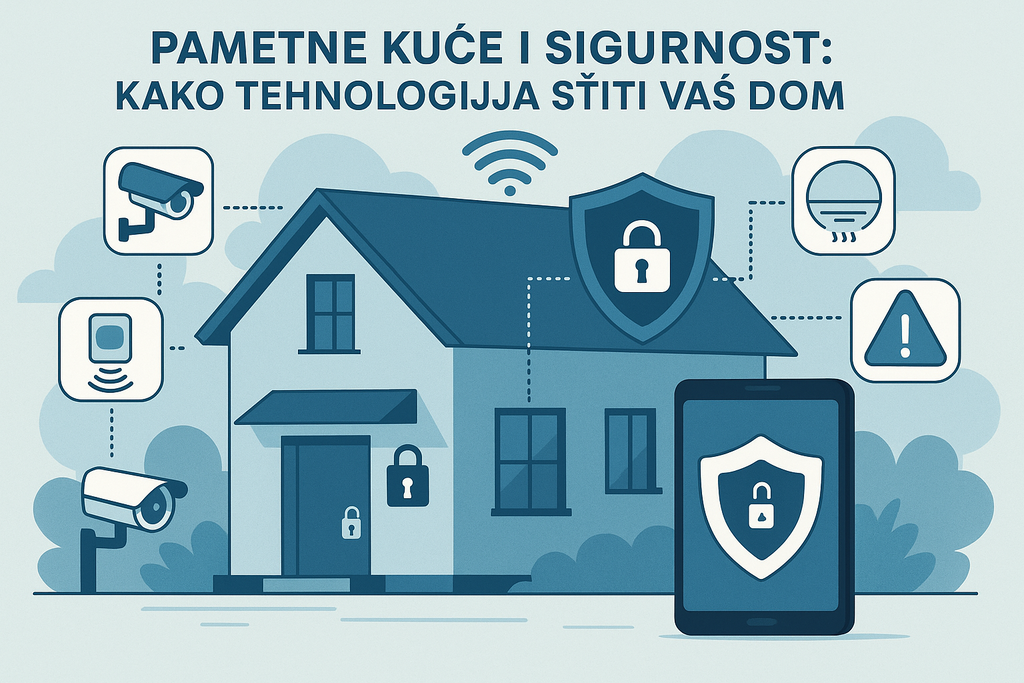
Every smart home can be equipped with a range of security components that form a comprehensive protection system. Besides basic equipment like cameras and sensors, it is possible to install smart locks, sirens, smoke detectors, and CO2 detectors. The connectivity of all devices enables faster response to threats and better coordination. The key to success is that all devices collaborate and automatically react to specific situations.
The most important components include:
- Smart surveillance cameras (indoor and outdoor)
- Motion sensors and window/door opening sensors
- Smart locks and electronic access controls
- Smoke, gas, and carbon monoxide detectors
- Alarm systems connected to mobile applications
Smart Cameras and Video Surveillance
Smart cameras have become a security standard in modern homes. They provide real-time monitoring, motion detection, and cloud or local storage of recordings. Most models also have night vision, two-way audio communication, and the ability to notify owners of suspicious events.
Advantages of Smart Cameras:
- Access to footage from anywhere via an app
- Automatic recording triggered by motion detection
- Two-way communication with people outside the house
- Integration with other devices (alarms, lights)
Motion and Opening Sensors
These sensors are a fundamental protection element in a smart system. Their primary function is to detect movement or the opening of doors and windows at unexpected times. They can be placed in entrances, garages, windows, and hallways and connected to alarms, cameras, or smart lights.
Advantages of Sensors:
- Quick reaction to unauthorized entry
- Activation of lights and cameras when entering the home
- Possibility of silent notification to the owner without audible alarm
- Long battery life with minimal consumption
Smart Locks and Access Controls
Smart locks allow locking and unlocking doors without a physical key. They are installed on existing locks or fully replace them, and users control them via mobile phones, PIN codes, fingerprints, or even facial recognition. They are ideal for monitoring who and when enters your home and often allow temporary access for guests or delivery personnel.
Functions of Smart Locks:
- Control via mobile app
- Log of all entries and exits
- Temporary access for guests (time, days)
- Automatic locking when leaving the home
The Role of Mobile Apps in Home Monitoring
Mobile apps are the central hub for managing smart systems. Through the app, users receive notifications, view cameras, control locks, turn lights on or off, and even regulate home temperature. A good system allows scenario personalization and automatic reactions to events.
Key Features of Apps:
- Real-time notifications (e.g., motion, smoke)
- Remote locking or alarm activation
- Control of lighting, heating, and household appliances
- Integration with other smart systems (e.g., Alexa, Google Home)
Advantages of Smart Security Systems
The benefits of smart security far outweigh the initial investment. Systems are adaptable, upgradeable, and provide users control over their homes like never before. Besides security, these systems increase peace of mind, especially during travel or when the home is empty.
Key advantages include:
- Reduced risk of burglary and damage
- Greater control over home access
- Fast notification and response to incidents
- Possibility to combine with energy efficiency
What to Consider When Choosing and Installing
When choosing a system, it is important to consider the size of the home, the number of entry points, and the needs of household members. Some users prefer simple wireless systems, while others opt for professional installation with monitoring. Also, internet network security and data privacy must not be overlooked.
Implementation Tips:
- Choose a reputable manufacturer with good support
- Ensure a strong Wi-Fi network with encryption
- Regularly update devices and software
- Check GDPR compliance for video data processing
The Future of Security in Smart Homes
Smart security systems are constantly evolving. Artificial intelligence is increasingly involved in risk recognition, behavior analysis, and incident prediction. Greater integration between security, comfort, and energy efficiency is expected.
Future Trends:
- Automatic analysis of movement and unusual behavior patterns
- Integration of smart security systems with electric vehicles
- Increased use of biometrics and facial recognition
- Local data processing for enhanced privacy
Conclusion
Smart homes not only simplify daily life but also significantly enhance security levels. Investing in a smart home security system is becoming a logical choice for anyone who wants to protect their home and feel safe regardless of their location. By using technology in the service of security, your home becomes a smart and reliable ally.
smart homes